
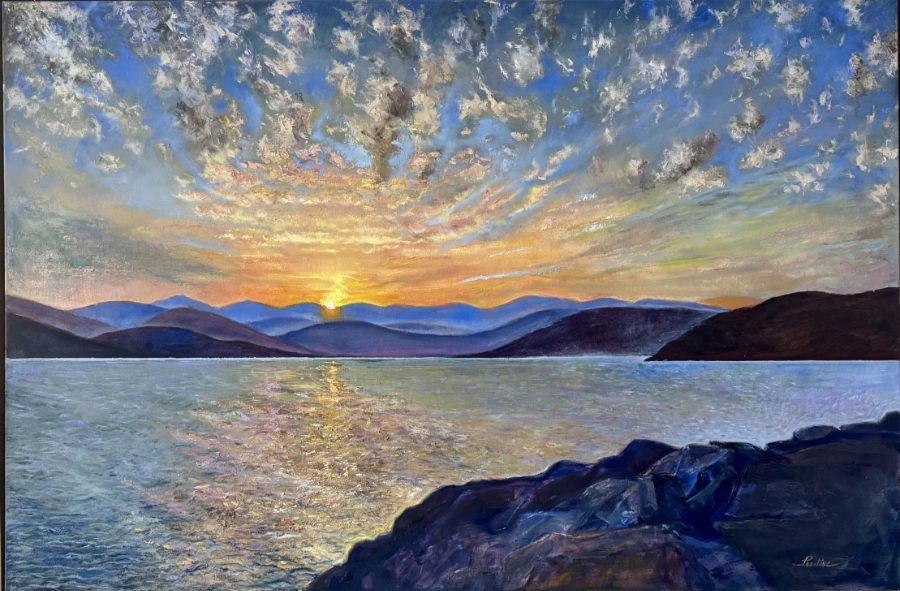
On some of the Greek islands in the Cyclades, the views take your breath away. On others, it is the silence. Traveling through Athens and the Cyclades with artist Pauline Adams in mind, you begin to notice how light, shadow and emptiness can feel as present as people and noise. Her paintings, stripped of crowds and tuned to color, geometry and atmosphere, become an unexpected map for exploring this part of Greece.
This journey begins in layered, restless Athens and arcs across five Cycladic islands, Santorini, Mykonos, Paros, Naxos and Sifnos. Her canvases become emotional subtitles to each place, the feeling you are left with once the boats depart, the tavernas close and the last coffee cup is cleared.
Athens: Between Storms
Athens is rarely quiet. Scooters ricochet down narrow streets, market vendors shout prices and the Acropolis rises above it all, impassive. Yet the city has its own pockets of stillness, moments that feel like holding your breath before something shifts.
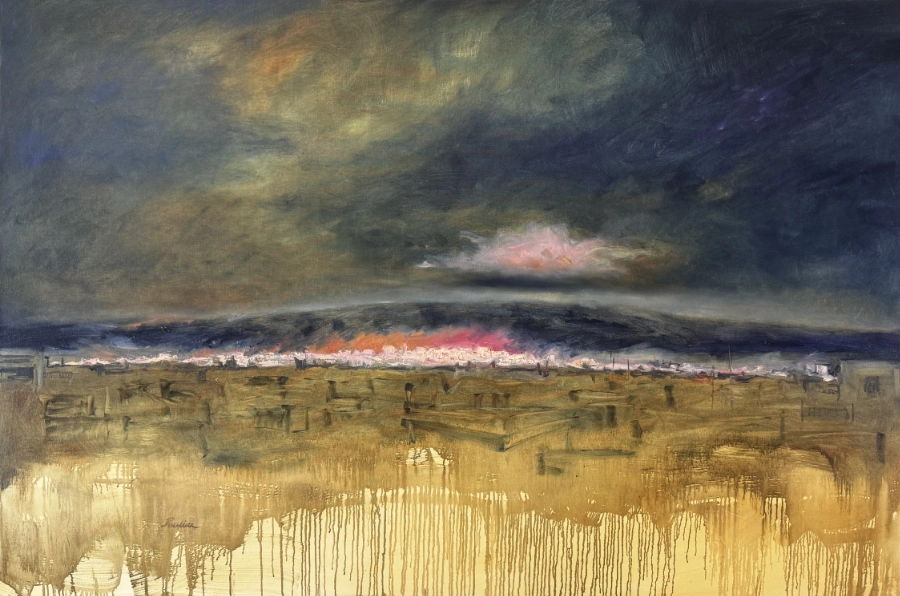
Pauline Adams’ Athens Between Storms captures exactly that pause. The title suggests a city caught in the charged calm before and after drama. Walk through neighborhoods like Plaka and Koukaki early in the morning, when shutters are still closed and the marble glows a soft gray, and you sense it, Athens is a place suspended between old and new, chaos and calm, ruin and reinvention.
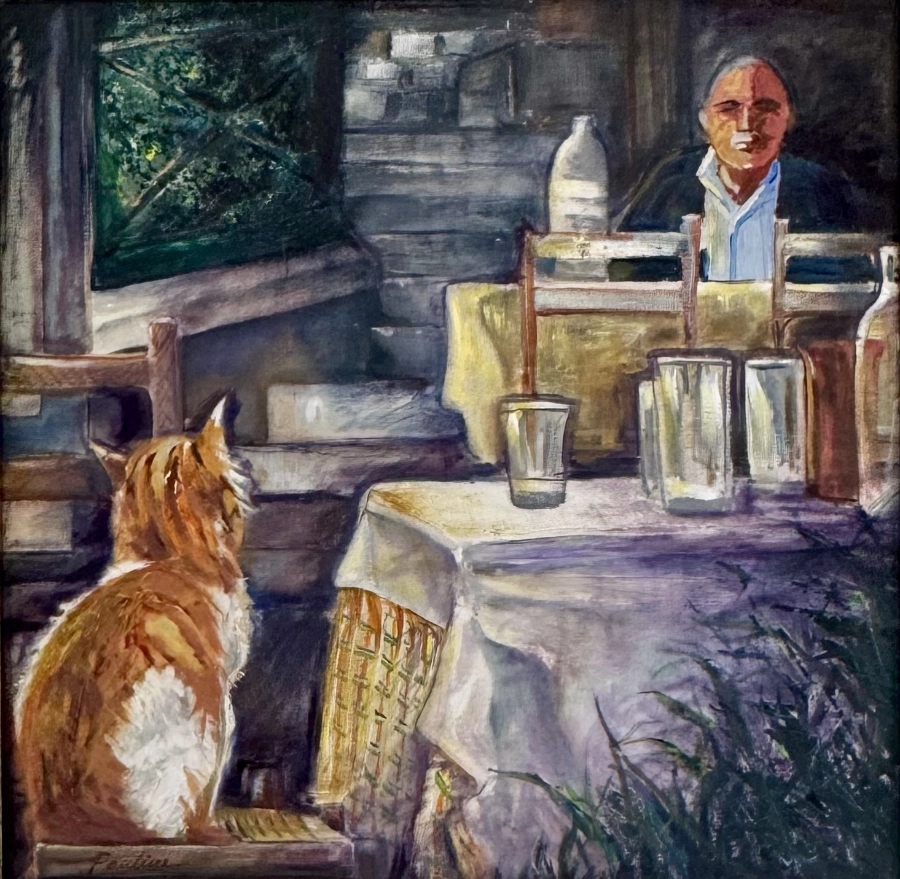
The Last Customer is another familiar scene. Anyone who has lingered at a café as the evening winds down knows it, the final glass on a table, a waiter leaning on the doorframe, the hum of the city softening. It is a reminder to slow your pace. Instead of rushing from the Acropolis to the Ancient Agora and on to the museums, let yourself sit in that late hour quiet. Order a Greek coffee or a glass of ouzo and watch the city shift from gold to neon.
In Adams’ hands, Athens is not just a historical highlight reel. It is a city of thresholds between storms, between crowds, between eras and the perfect starting point before the sea and the islands take over the narrative.
Santorini: Where Silence Splits
The ferry glides into Santorini’s caldera and suddenly the world is vertical, cliffs scorched black and red, villages clinging to the rim, the sea a deep, impossible blue. It is one of the most photographed places on earth, but Adams’ Santorini series suggests something beneath the postcard.
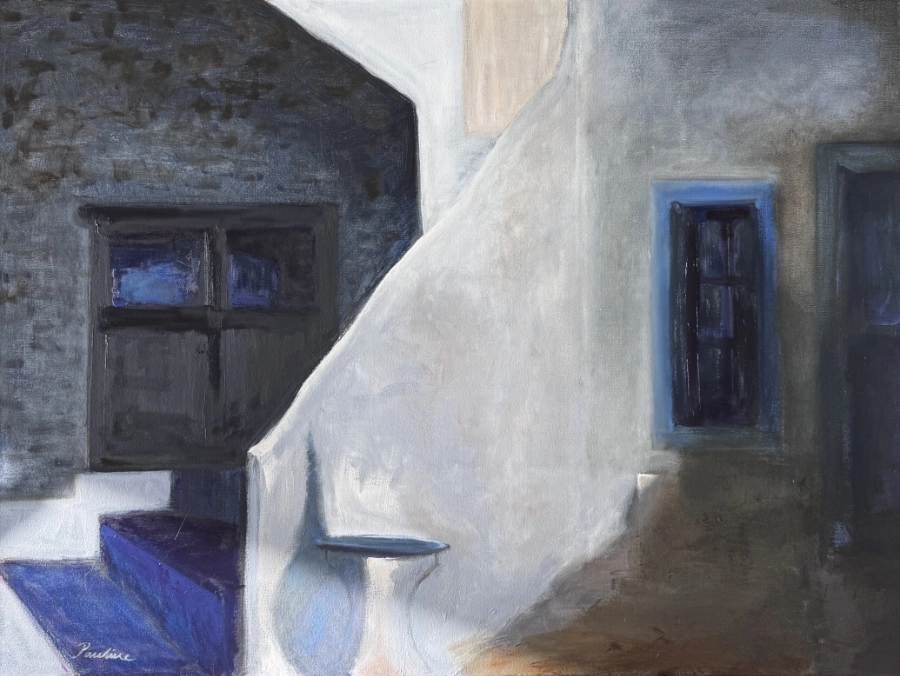
Where Silence Splits fits a very particular moment. Stand on the caldera edge just after sunset, when the last cruise ship has pulled away and the town’s chatter thins. The sky goes from rose to indigo and the sea darkens into something almost abstract. The silence feels like it is splitting between day and night, land and sea, what is seen and what is imagined.
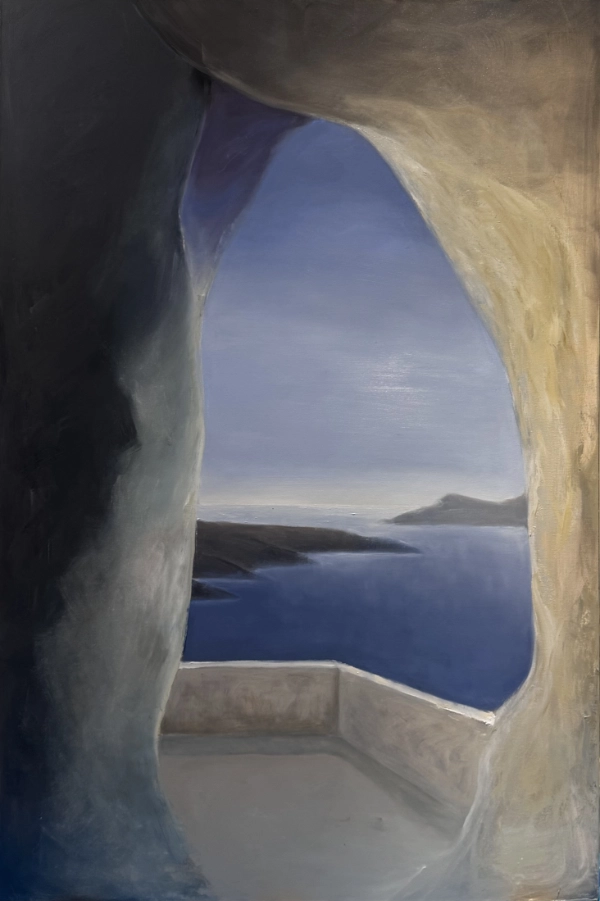
In The Threshold, you sense the architecture of Santorini, doorways framing sea, low walls leading your eye toward the horizon. Walking the narrow lanes of Oia and Fira, you move through a sequence of thresholds, courtyard to terrace, shadow to light, intimacy to panorama. Each archway is an invitation to step into a new view.
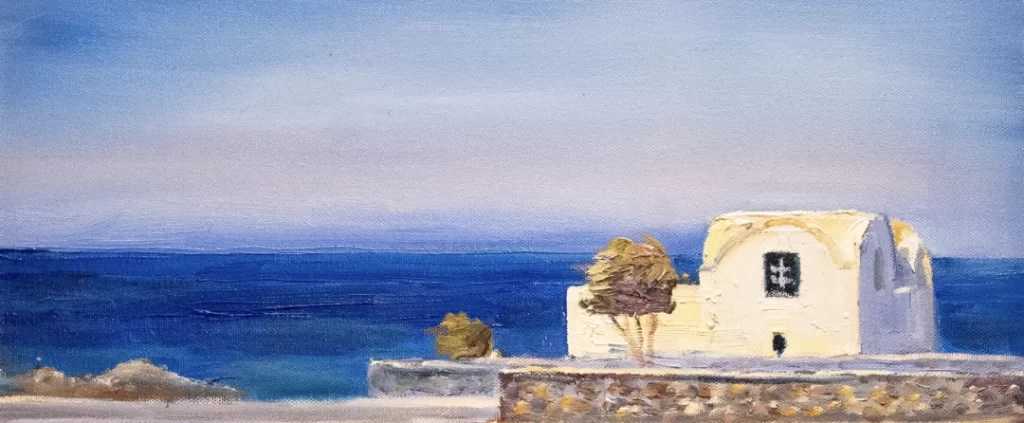
Blue Beyond distills the island’s essential promise. From almost any balcony, the eye is drawn past church domes and rooftops to an endless blue. That beyond is what lures travelers here, the illusion that there is no edge, only continuation.
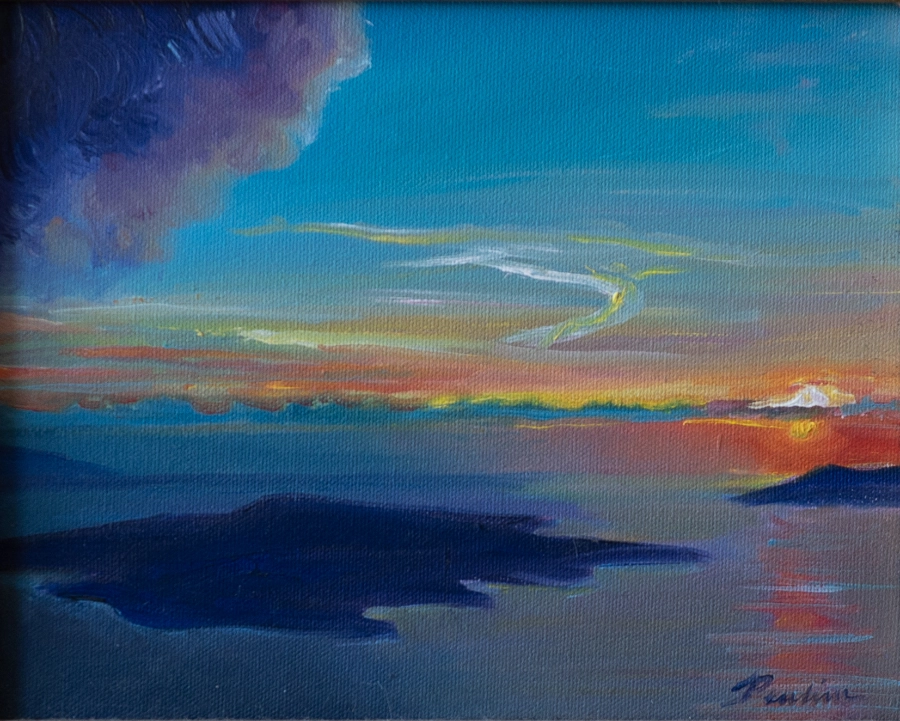
Aegean Nocturne belongs to Santorini at night. The stark daylight geometry softens and the caldera becomes a dark void edged in pinpricks of light. Stroll along Fira’s clifftop path and you walk through a living nocturne, bars pulsing below, lanterns on terraces, the occasional church bell cutting through the hush.
Travel Santorini with these paintings in mind and you look past the crowds to frame your own private island, the empty alley, the solitary chair on a terrace, the thin line where sky and sea blur.
Mykonos: White Silence
Mykonos is famous for noise, beach clubs, music that spills into the streets, nights that dissolve into mornings. Adams offers another Mykonos, one you visit at off hours.
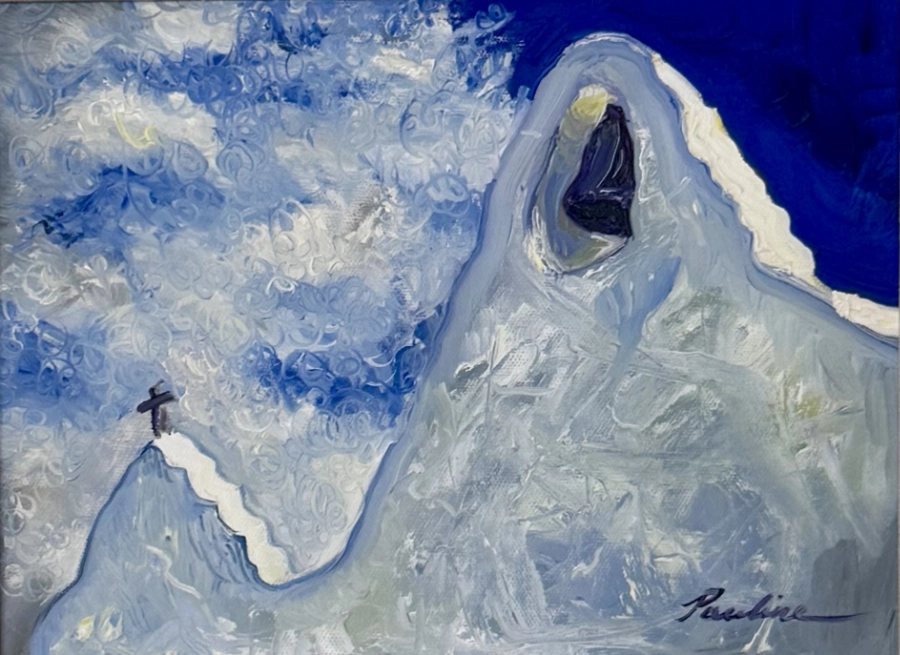
White Silence belongs to the island at dawn. Wander Mykonos Town before the first tenders arrive and you will see it, cubes of white architecture, lanes still damp from washing, cats stalking empty corners. The blinding whiteness becomes a kind of hush, the previous night scrubbed clean.
In The Blue Beyond the Terrace, imagine standing on a hotel balcony above the Old Port, terraces cascading down to the water. Umbrellas are folded, tables bare, the horizon stretching blue on blue. Mykonos feels less like a party and more like a contemplative outpost, a place where your only task is to follow the line where sea meets sky.
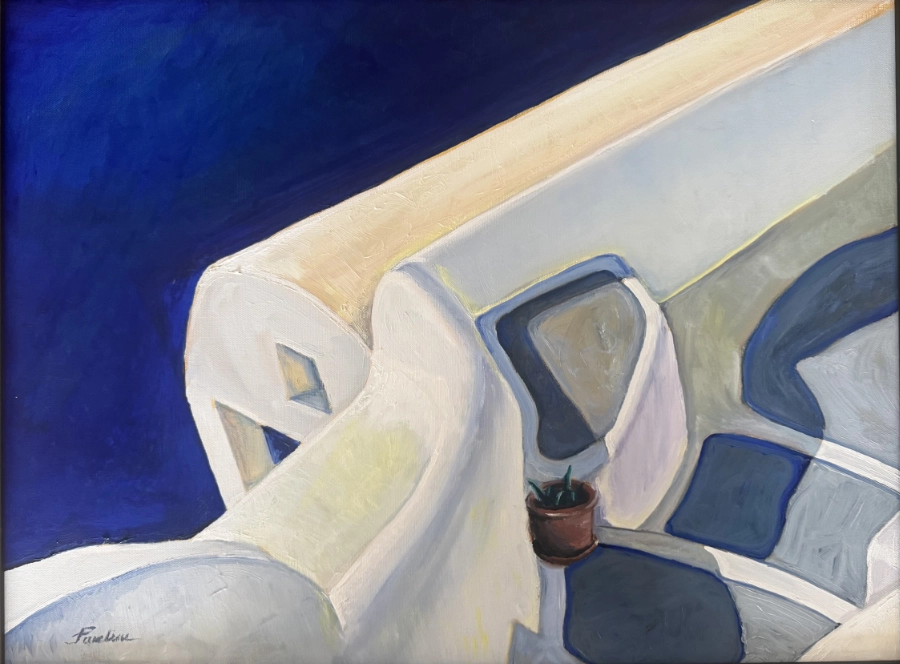
Nocturnal Mykonos nudges you into the night hours, when the island becomes theatrical. Windmills glow like stage props, alleys shift through blues and magentas and reflections in the harbor make the town appear doubled. Walk the waterfront of Little Venice, braving wind and spray, and you sense the drama in that title.
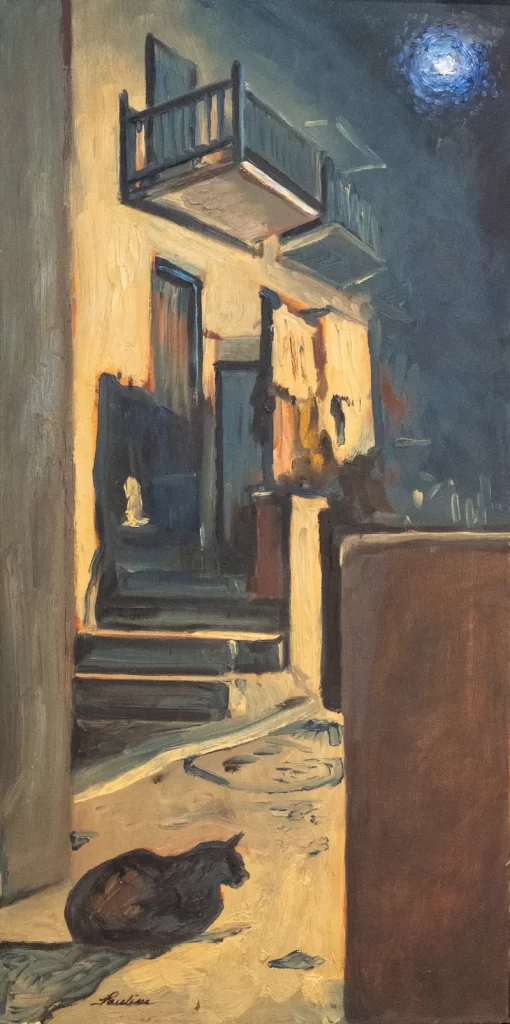
The Silent Companion might be a lone chair on a balcony, your shadow on a whitewashed wall or the sea itself pressing against the town. Travel here and you recognize that your strongest relationship is not only with other people. It is with wind, light and the quiet following the last song of the night.
Stay tuned for Part 2 which will explore the other Cyclades Islands.
To explore more of Pauline Adams’ work and follow her forthcoming exhibitions, visit: PaulineAdams.com
TRAVEL NOTES
Getting there
Athens is the main gateway to the Cyclades, with frequent nonstop flights from major European hubs and seasonal service from the United States. From Athens International Airport, the metro and express buses connect directly to the city center. For the islands in this story, you can fly or sail. Santorini and Mykonos have airports with multiple daily flights from Athens, while high speed ferries depart from Piraeus and Rafina ports from spring through early fall.
When to go
Late April to early June and September to mid-October offer the best balance of mild weather, swimmable seas and fewer crowds. July and August are peak months, especially on Santorini and Mykonos, with higher prices and stronger Meltemi winds. Many hotels and some restaurants close from late fall through March, so check seasonal openings before you plan.
Getting around
In Athens, rely on the metro, taxis and walking to avoid traffic and parking hassles. On Santorini and Mykonos, local buses connect main beaches and towns, though service can be crowded in high season. Renting a small car or quad bike offers more flexibility but book early. Ferries between islands vary from slow, scenic crossings to fast catamarans, and schedules can shift with weather, so allow extra time for connections
Where to stay
On Santorini, decide between caldera views in Fira, Firostefani or Oia, or quieter beach bases like Kamari and Perissa. In Mykonos, staying in or near Mykonos Town gives easy access to restaurants and nightlife, while Ornos and Platis Gialos are good for beach days. In Athens, look at central neighborhoods such as Plaka, Koukaki and Syntagma for walking access to major sites, cafés and galleries.
Art and atmosphere
If Pauline Adams’ work inspires you to seek out art while you travel, Athens has excellent contemporary galleries around Kolonaki and Metaxourgio and several small spaces in the historic center. On Santorini and Mykonos, look for local galleries tucked into village lanes, many open late into the evening. Bring a notebook or keep a photo journal of the thresholds, doorways, terraces and quiet corners that echo the moods in her paintings.