
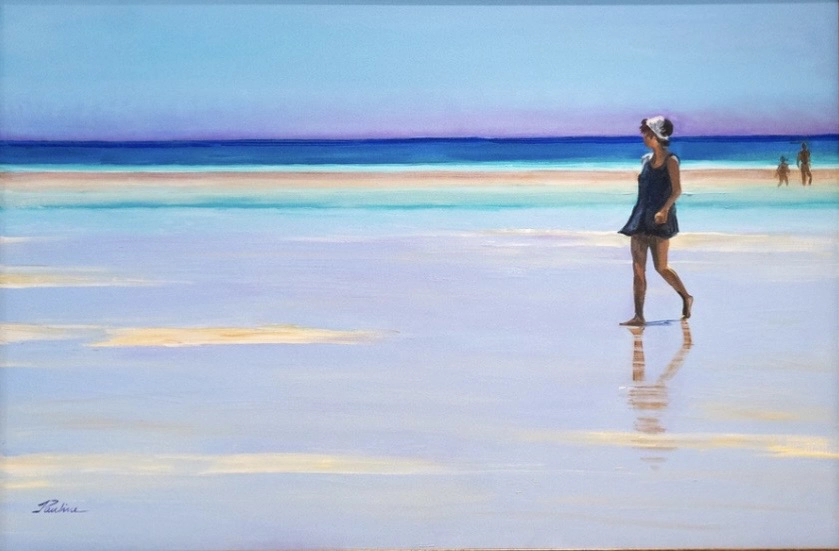
Leaving the Greek island of Mykonos behind, the journey with Pauline Adams shifts into a quieter register. The first part of this story moved from the intensity of Athens to the drama of Santorini and the secret silences of Mykonos, following her paintings like emotional signposts across the Aegean. Now the arc bends toward islands that feel more spacious and grounded, where the rhythm slows and the blue of the sea seems to deepen.
In Paros, Naxos and Sifnos, Adams’ titles become almost like stage directions. Blue Beyond the Wall, Threshold of Time, Anchored in Sifnos, each one points to a different way of inhabiting the Cyclades islands. The crowds thin, the views open and the details grow more intimate, a low stone wall, a marble doorway, a fishing boat resting in a cove.
If the first half of the trip is about spectacle and contrast, this second half is about what remains when the rush subsides. With her work in mind, you begin to notice how these islands hold you in place, gently but firmly, inviting you to look longer and breathe more deeply as the Aegean unfolds on all sides.
Paros: Blue Beyond the Wall
Paros is where the Cyclades exhale. Less performed than Santorini and less insistent than Mykonos, it offers room to breathe. Fishing boats bob in Naoussa’s harbor, marble lanes twist under bougainvillea and beaches unfurl in gentle crescents.
Blue Beyond the Wall seems to describe Paros exactly. The island is full of low walls around fields, edging alleyways, ringing small chapels that screen but do not entirely block the view. As you wander Parikia and Naoussa, the sea keeps reappearing in fragments, through a gap in a stone fence, over a row of white houses, between wind sculpted rocks.
The title captures the sensation of walking Paros. You are always one turn away from water, half aware of the blue just out of sight. It invites a slower style of travel. Instead of ticking off sights, you meander up rough stone steps, along quiet backstreets and out to small harbors where fishermen mend nets in the shade.
Sit on a low wall at the edge of Naoussa as the light softens and watch ferries cross to neighboring islands. There is a stillness here, even in high season, that feels like a deep breath after the intensity of Santorini and Mykonos.
Naxos: Threshold of Time
Naxos is the largest of the Cyclades and perhaps the most grounded. Fertile valleys, mountain villages, long sandy beaches and a town that feels lived in rather than staged. The ancient and the everyday coexist without fanfare.
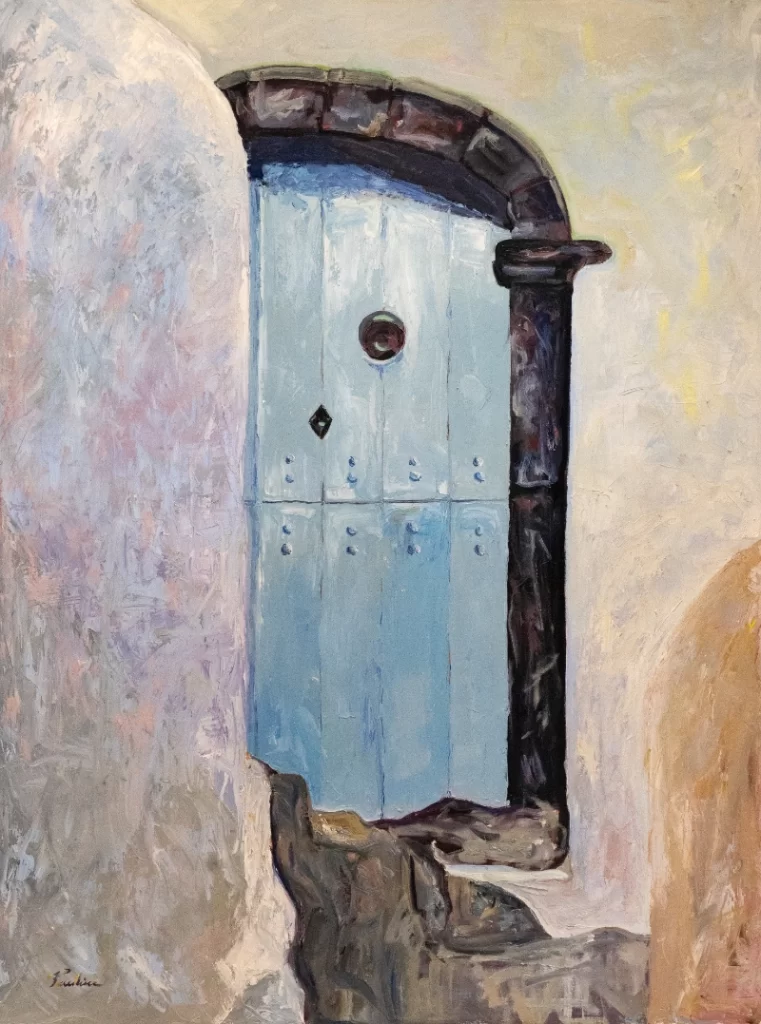
Threshold of Time could be the island’s motto. Stand before the Portara, the marble doorway that is all that remains of an unfinished temple, at sunset and you understand why. The stone frame catches the last light as ferries slide in and out of the harbor below. One step through its opening feels like walking from one era into another.
The Passage evokes the labyrinth of the Kastro above the port. Slip into its arched gateways and covered lanes and the temperature drops, the present thins. Stone corridors twist past Venetian mansions and chapels, houses where laundry flutters within arm’s reach overhead. You move through time not as an observer but as a participant.
Traveling Naxos with these works in mind, every alley and doorway becomes a passage, between light and shadow, sea and mountains, old gods and modern life. Drive inland and the island reveals quieter thresholds, from coastal bustle to villages like Halki and Apeiranthos, where time seems to circle back on itself.
Sifnos: Anchored in Sifnos
Sifnos feels like a secret passed from traveler to traveler. Its beauty is understated, terraced hillsides, dovecotes, windmills and white villages strung across an earthy landscape. It is an island of pottery, slow cooked food and walking trails.
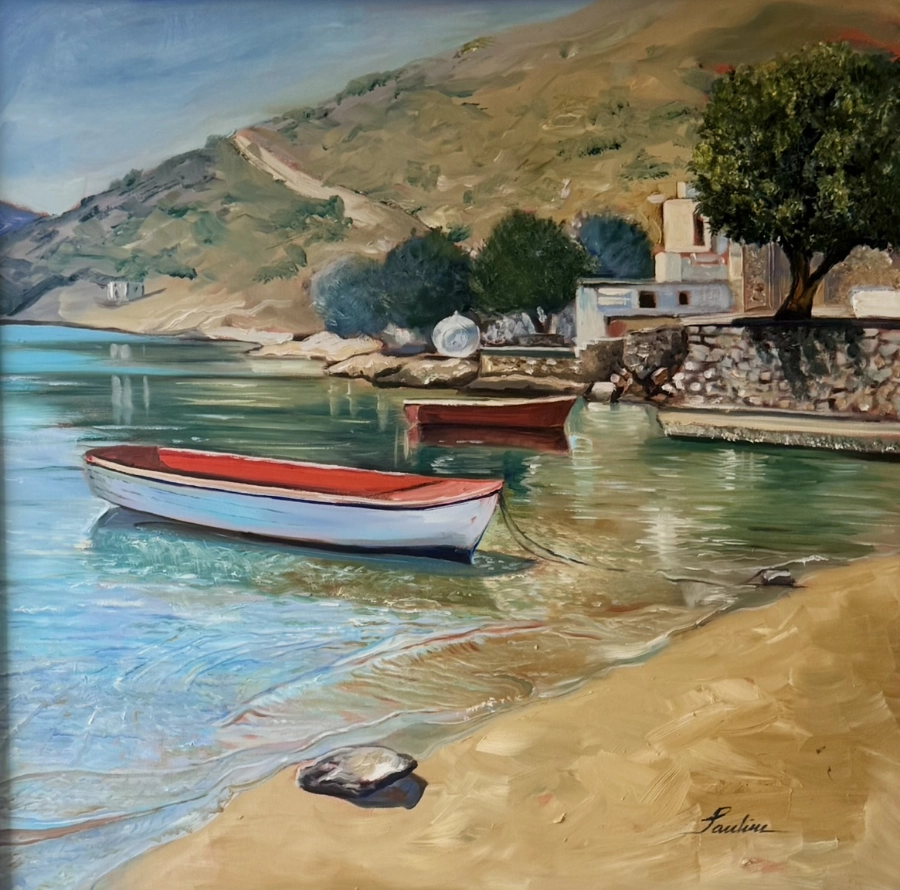
Anchored in Sifnos captures the island’s quiet assurance. Small fishing boats rest in coves like Kamares and Faros, chapels perch on promontories and the web of footpaths links villages to monasteries and beaches. Everything feels gently held in place.
Travel here means allowing yourself to be moored. Spend days hiking from Apollonia to Kastro or down to Chrisopigi monastery, white against the rocks above the water. Long lunches in vine shaded tavernas turn into lingering afternoons with chickpea stews, caper salads, baked cheeses and local wine.
At dusk, from a terrace in Artemonas or Kastro, watch as the last light brushes distant islands on the horizon. There is an unmistakable sense of being settled, anchored not just in place but in a rhythm of life that is easier to feel than to describe.
Traveling the Cyclades Through Art
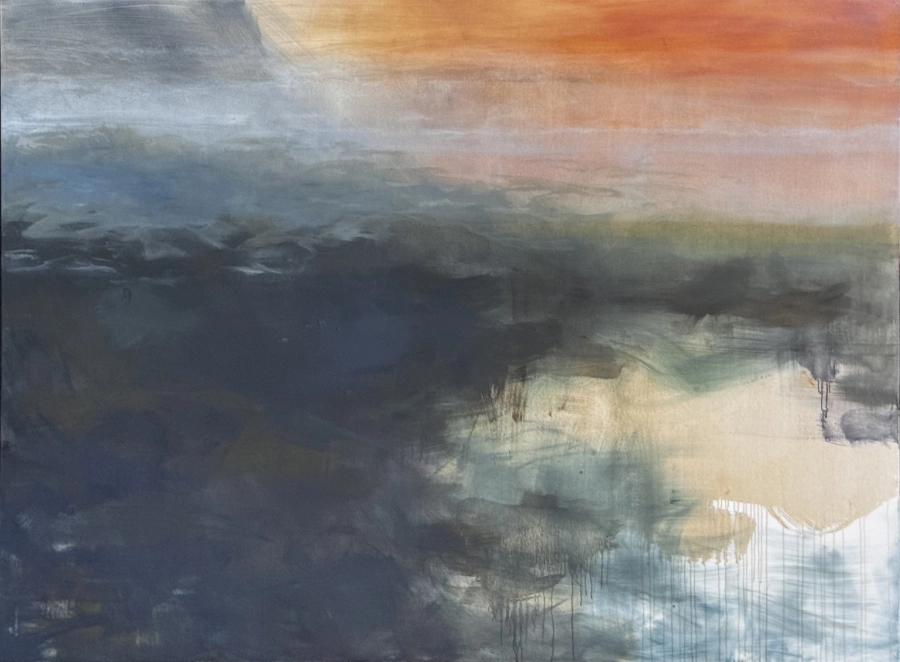
Seen through Pauline Adams’ work, Athens and the Cyclades islands become not just destinations but moods, a city between storms, islands of silence and thresholds, landscapes anchored in light and time. Travel is often described in lists, what to see, where to eat, which hotel to book. Her images suggest another layer, how a place feels when you have stopped moving long enough for the noise to fall away. In Athens and across these islands, that feeling lingers long after you have left, like color on the back of your eyelids when you close them against the Aegean sun.
To explore more of Pauline Adams’ work and follow her forthcoming exhibitions, visit: PaulineAdams.com
TRAVEL NOTES
Getting there
Paros, Naxos and Sifnos are all reached by ferry. High speed and conventional boats run from Piraeus and Rafina near Athens, with more frequent service from late April through October. There are also regular ferries linking the islands to each other and to Santorini and Mykonos, which makes it easy to build a multi-island itinerary. Naxos and Paros have small airports with daily flights from Athens, a good option if seas are rough or your time is short.
When to go
Late spring and early fall are ideal for this quieter half of the Cyclades. May, June, September and early October bring warm days, swimmable water and fewer crowds than midsummer. July and August are busier, especially in Naoussa on Paros and Naxos Town, and the Meltemi winds can be strong. Many hotels and some tavernas close from late October to April, so check dates if you are planning an off season escape.
Getting around
On Paros and Naxos, local buses link the ports with main beaches and villages, but a rental car or scooter opens up smaller coves and hill towns. Roads are mostly good but can be narrow and winding inland, so drive slowly. Sifnos is compact and well served by buses and taxis, and many of its best experiences are on foot, along old stone paths between villages and monasteries.
Where to stay
On Paros, base yourself in lively Naoussa for nightlife and dining or in Parikia for easy ferry access and a more local feel. Naxos Town offers a walkable mix of beach, port and old town, while Plaka and Agios Prokopios suit those who want to wake up directly on the sand. On Sifnos, Kamares is convenient for the ferry, Apollonia puts you in the middle of village life and Artemonas and Kastro trade proximity for views and a quieter pace.
Art and atmosphere
If Pauline Adams’ work heightens your eye for detail, bring a small notebook or sketchbook and a camera. Look for local pottery workshops on Sifnos, whose ceramics tradition runs deep, and small galleries in Parikia, Naoussa and Naxos Town that showcase Cycladic artists. Give yourself unstructured time each day, whether it is on a church terrace at sunset or a stone wall above a harbor, to sit still and let the colors and shapes settle into memory.